
Thresholds and ordeals
What initiation is: entering into oneself
For Maestro Cornelio, being initiated does not mean joining an organisation or receiving a title, but beginning the path towards one's own centre, where one's true Will dwells.
The word "initiation" calls up secret ceremonies, doors that open only to a few, degrees and titles. Maestro Cornelio brings it back to its simplest sense: initium, in Latin, means beginning. To be initiated is to begin. And what one begins, the Master teaches, is a journey with a single direction: towards one's own centre.
An experience, not a membership
The Master's first clarification concerns belonging. In history many initiatory societies have conferred degrees, signs of recognition, secrets to be kept. The Master does not despise these traditions, but warns that they can be misleading: one can receive a degree without having taken a step, and one can walk a long way without ever having received any title. True initiation is an inner experience. No one can confer it from outside; each of us accomplishes it with our own steps.
The second birth
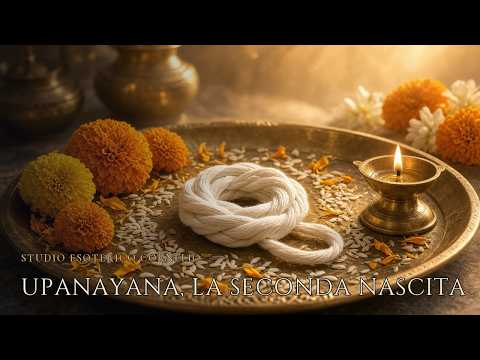
Many cultures have described initiation as a second birth. In India the rite of upanayana brought the boy to his teacher and made him "twice born"; in the ancient mysteries the initiate died symbolically to his former life in order to be reborn into a new one. The Master takes up the image: to be initiated is to be born a second time, not from a mother's womb but from one's own choice. The first birth gives us life; the second gives us direction.
We are born once to live, and a second time to know why.
Towards the centre
Where does the path lead? The Master answers with the Law: to one's own centre, to the point where each of us is a star with an orbit of our own. The initiatory path does not add anything foreign to the human being; it removes what hides them from themselves: borrowed habits, fears, identities built for others. It is a descent and an ascent at once. One descends towards what one is; one climbs towards what one can become.
The stages
The Master describes the path in stages, which the other entries of this website explain one by one. There is the threshold, the moment of decision. There are the ordeals, which reveal where one truly stands. There is the discipline of body and mind, from posture to concentration. There is the meeting with the Angel, the presence that knows the true Will. There is the Abyss, the passage beyond the dividing mind. And there is the Great Work, the alchemy by which a human being becomes whole.
The ladder
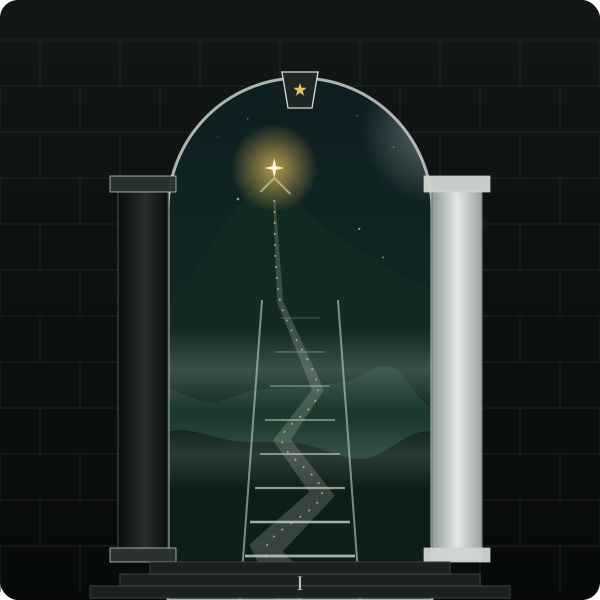
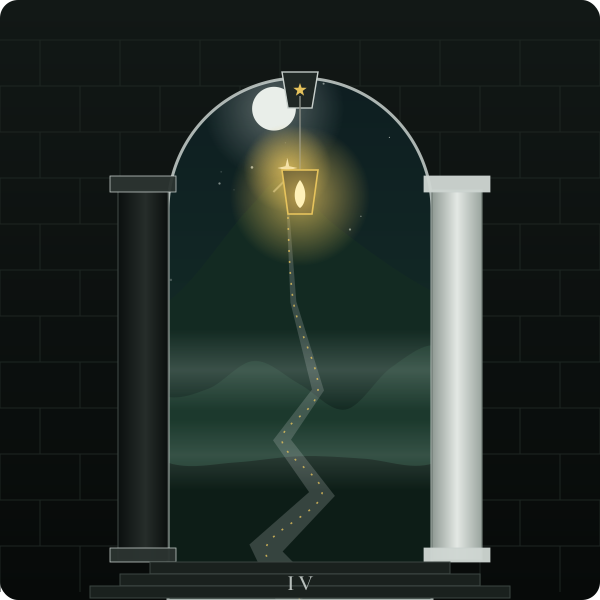
The image accompanying this entry is a ladder rising through a doorway, towards the path and the light beyond the mountains. The Master chooses it because the ladder teaches two things. The first is gradualness: one does not climb by skipping rungs, and whoever tries falls. The second is reversibility: on a ladder one climbs and descends, and even those who are far along often return to the first rungs to consolidate them. There is no shame in beginning again; there is wisdom in it.
Who can be initiated
The most frequent question is: who can begin? The Master answers without hesitation: anyone. No special gifts are needed, no particular age, no faith. All that is needed is the sincerity of wanting to know one's orbit and the courage to travel it. The doors of the house of the Law, the Master repeats, are open to anyone who approaches sincerely, wherever they may be on their orbit.
The first step
And the first step? The Studio points to it simply: begin keeping a journal. Each evening, note down a minute of silence, a question, an observation about yourself. It seems little, and it is; but it is a true beginning, because it turns life into a subject of study. The Master says that initiation begins on the day one stops undergoing one's existence and starts observing it.
Watch the video
Read next
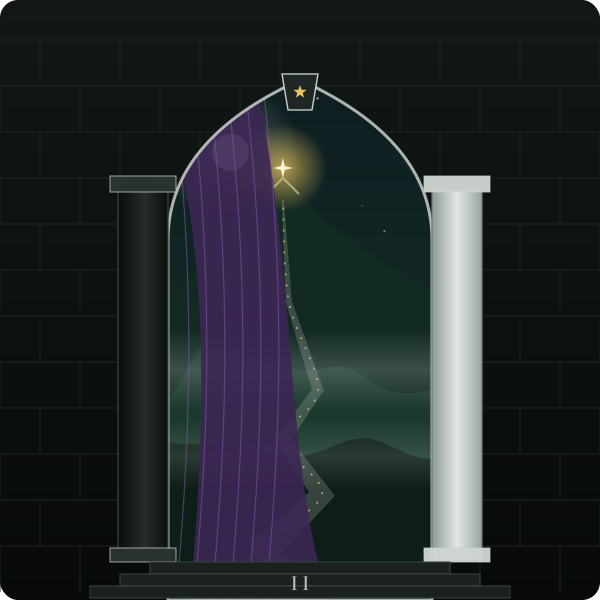
The threshold and the oath
To cross a threshold is to decide. Maestro Cornelio teaches that the initiate's oath counts for what one does, not for what one says, and that the veil lifts a little at a time.
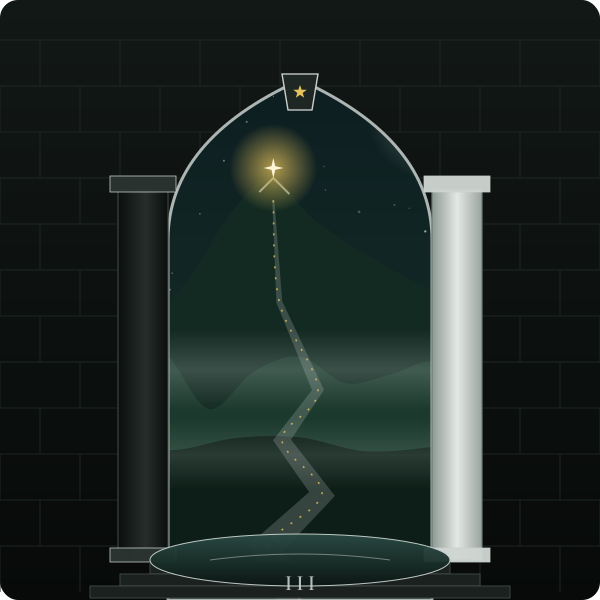
"Know thyself": the initiate's mirror
The words carved on the temple at Delphi as the first commandment of the path: Maestro Cornelio explains why self-knowledge is both the starting point and the goal.
The journal: the memory of the path
The initiate's first tool is not a ritual object but a notebook. Maestro Cornelio explains how to keep the journal and why without it the path is lost.
