
Discipline of the mind
Concentration: a single thought
Keeping the mind on a single object: the gateway to every meditation. Maestro Cornelio teaches concentration as the art of returning, patiently, every time the mind wanders.
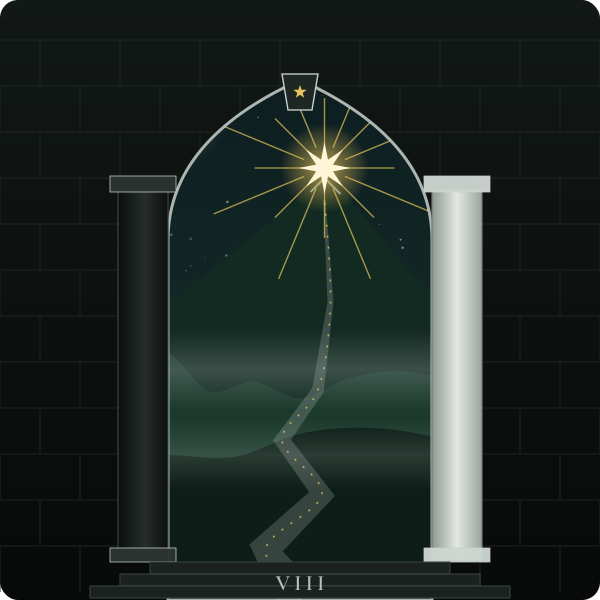
The body is still, the breath is calm. Now Maestro Cornelio teaches the third step, the one that opens the door to inner silence: concentration. It consists of one thing only, simple to say and very hard to do: keeping the mind on a single object.
The wandering mind
Whoever tries for the first time to concentrate on a single thought discovers the nature of their mind. After a few seconds it is already elsewhere: a memory, a worry, an image, a comment on the exercise itself. The traditions of India compare the mind to a monkey leaping from branch to branch. The Master is not scandalised by this. He teaches that discovering how restless the mind is is already the first fruit of practice: for the first time one sees what one previously underwent without knowing it.
The object
What should one concentrate on? The Master suggests starting with a simple object: a point of light imagined at the centre of the forehead, a geometric figure, a five-pointed star, the flame of a candle. What matters is that the object stays the same for a long period, and that it is neutral: not a thought charged with emotion, which would drag the mind into a thousand associations. The image accompanying this entry is a star above the mountain's summit: a single point of light towards which the whole landscape converges.
Concentration is not not thinking: it is returning, every time, to the one chosen thought.
The art of returning
Here lies the heart of the teaching. Concentration does not consist in never being distracted, which is impossible at the start, but in returning every time one notices one has been distracted. One notices one is elsewhere, gently notes where one had gone, and brings the mind back to the object. The Master teaches that every return is a successful exercise. Whoever gets angry with themselves over distractions only adds another distraction; whoever returns patiently strengthens the muscle of attention every time.
Counting the breaks
The Studio offers a simple and rigorous method, in keeping with the scientific spirit of the teaching. During the exercise, keep count of the breaks, for example by moving a bead or a small stone every time you notice you have been distracted. At the end, record the number in the journal together with the duration. After a few weeks the numbers begin to fall. It is not a competition, the Master warns: it is a mirror, showing exactly how far one has come.
The silence beyond concentration
What happens when concentration becomes steady? The Master speaks of it soberly. Little by little the returns become less frequent, and the mind stays on the object with less and less effort. Then, at times, something different happens: the distinction between the observer and what is observed seems to fade, and only a luminous, quiet presence remains. Eastern traditions call these states by precise names; the Master prefers not to describe them too much, so as not to create expectations. They will come by themselves, if they are to come. The task is to keep returning.
Concentration in life
Seated practice is not an end in itself. The Master teaches that the same ability to return serves at every moment of life: in work, in listening, in conversation. Whoever has trained their attention knows how to stay present, and whoever knows how to stay present knows how to listen to their true Will. This is why concentration is the gateway to the rest of the path: without it every other practice stays on the surface.
Every day
The Master recommends regularity more than length. Ten minutes every day are worth more than an hour once a week. The mind, like every faculty, is educated by repetition. At the end of each exercise the Studio suggests remaining a moment longer in silence, without an object, and listening: it is in that silence, says the Master, that the rest will reveal itself.
Watch the video

Read next
Motionless posture: the body as a temple
The first step of the discipline of the mind is the body. Maestro Cornelio teaches motionless posture as the foundation of recollection: a body that is still, comfortable and upright.
The breath: the rhythm that unites body and mind
After posture, the breath. Maestro Cornelio teaches us to observe and gently regulate the breath, the natural bridge between body and mind.
What initiation is: entering into oneself
For Maestro Cornelio, being initiated does not mean joining an organisation or receiving a title, but beginning the path towards one's own centre, where one's true Will dwells.
