
The Angel
The genius and the daimon: the spirit that accompanies us
Before angels, the Greeks and Romans spoke of the daimon and the genius, the spirit accompanying each person from birth. Maestro Cornelio explains their meaning for the inner path.
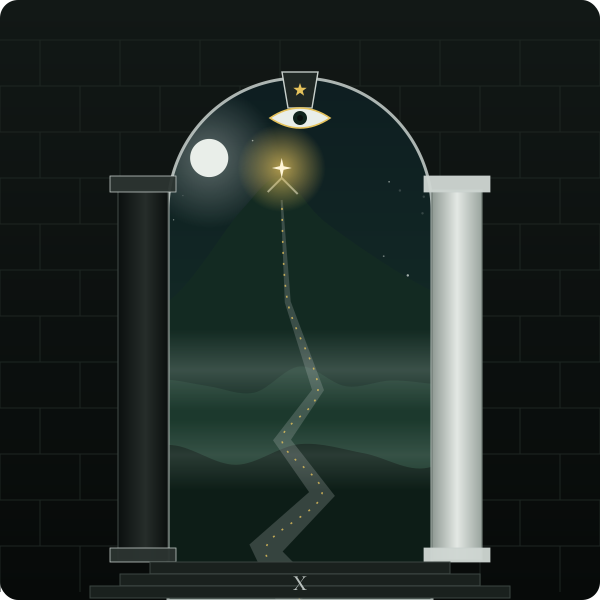
Long before Christian theology spoke of the guardian angel, the Greeks and Romans had a similar idea: every person is born accompanied by a spirit. The Greeks called it daimon, the Romans genius. Maestro Cornelio considers these ancient figures a precious key to understanding the Angel the path speaks of.
The daimon of Socrates
The most famous case is that of Socrates. The philosopher said that since childhood he had an inner voice, his daimonion, which never told him what to do but stopped him when he was about to do something wrong. Socrates followed it with absolute faithfulness, even before the judges who condemned him to death. The Master sees a subtle teaching in this account: the inner voice is not always positive advice. Often it shows itself as a brake, a silent "no" that protects one's orbit.
The genius of the Romans
For the Romans every man had his genius, every woman her iuno; and places, families and cities had a protecting genius too. On one's birthday wine, flowers and incense were offered to the genius, because it was the vital force that had accompanied the person since birth. The Master recalls that our word "genius" comes from genius: originally it did not mean exceptional intelligence, but the personal spirit that makes each of us unique.
Everyone is born with their genius: the task is to recognise it, not to invent it.
A daimon for every soul
Plato, in the myth that closes the Republic, tells how every soul, before being born, chooses a life and receives a daimon who will accompany it in fulfilling it. The Master loves this myth because it describes in images the teaching of the Law: each of us has an orbit of our own, chosen before all memory, and a presence that guards it. The initiatory path is the slow return to the memory of that choice.
The voice and the brake
How does one listen to the genius? The Master points to two modes. The first is attraction: what calls us with a deep joy, what returns over time, what seems right even when it is hard. The second is the brake: that inner resistance, like the daimon of Socrates, which holds us back from choices that would betray our nature. Both must be heeded. Whoever follows only attractions risks confusing them with desires; whoever also heeds the brakes learns to tell them apart.
The eye
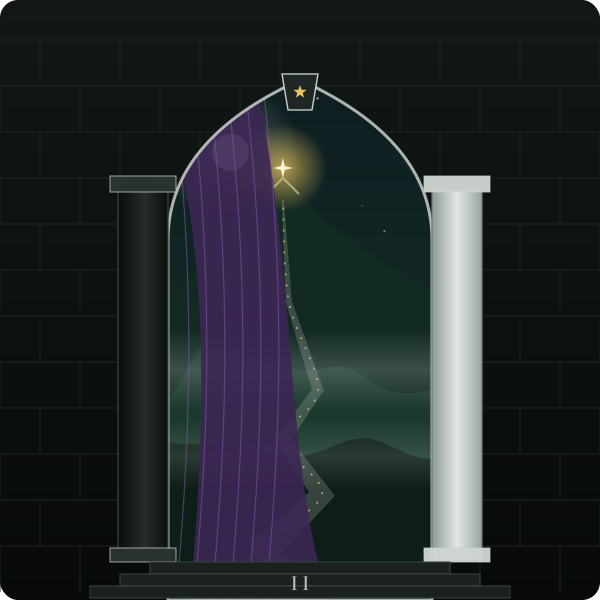
The image accompanying this entry shows an eye in the keystone of the arch, above the threshold. The Master explains it as the gaze of the genius: a presence that sees the path from above, that knows the whole course while we see only a stretch of it. It is not a gaze that judges or watches, but one that guards. Knowing that one is seen in this way, the Master teaches, takes away no freedom: it gives trust.
The genius and the Will
The Master concludes by linking these ancient figures to the Law. The genius, the daimon, the Angel are three names for one reality: the presence that knows our true Will. The ancients felt it as an outer spirit; the Law invites us to recognise it also as our own centre. In either case the task is the same: to listen. The Studio suggests a small Roman exercise: on your birthday, light a candle and devote a few minutes of silence to your genius, asking it to show you the next step of your orbit.
Watch the video
Read next
The Holy Guardian Angel: knowledge and conversation
The heart of the path in Maestro Cornelio's teaching: the meeting with the Angel, the inner presence that knows each person's true Will and reveals it to those who can listen.
What initiation is: entering into oneself
For Maestro Cornelio, being initiated does not mean joining an organisation or receiving a title, but beginning the path towards one's own centre, where one's true Will dwells.
The threshold and the oath
To cross a threshold is to decide. Maestro Cornelio teaches that the initiate's oath counts for what one does, not for what one says, and that the veil lifts a little at a time.
